Agencies now fly on technically correct, structurally misleading data with ads MCPs
A strategist, prepping for a client call, asks ChatGPT for the account's ROAS on Meta. The number comes back in seconds, clean enough to drop straight into the deck. On the call the client asks the same question, the strategist reads the number with full confidence, and an analyst then spends the next hour explaining why it was wrong. This sequence is the one Ad Age just covered when it dug into what the new ads MCP servers mean for media buyers, and it is the gap I went on the record about.
What do ads MCP servers actually change for agencies?
MCP servers let an assistant like Claude or ChatGPT pull from multiple ad platforms within one conversation. Prepping a call now means asking your agent about ROAS, top campaign, or best subject line across four channels in plain English and in one pass. Google, Amazon, Meta, and TikTok have each shipped an MCP over the past year, so the capability is real and not a future deliverable. The catch though, is that this incredible ability doesn’t come with any safety guarantee, and one wrong answer can destroy agency credibility.
Why is the analyst still the bottleneck even with MCP?
Since the strategist on that call could not fully trust the fast answer, the analyst is still the only path between a question and a decision. MCP made the question quicker to ask, but did nothing to make the answer safe to use, so every number that matters still needs to route through the one person who can actually verify it, exactly as it did before any of this got faster.
Each platform defines its metrics differently, so the fast answer still arrives unreconciled, which means the analyst stays the only one who can square those definitions into a number anyone can act on.
What does that bottleneck cost an agency over a month?
The analyst becomes the unofficial approval layer for every figure that leaves the building. Strategists wait on them, AMs wait on them, and calls get pushed while they dig through multiple sources to confirm one number. Each individual delay is short, which is why nobody flags it and the owner never sees it. Rarely is it one big reporting disaster that anyone remembers later, rather it is a hundred tiny delays a month that compound until the work simply feels slower and more expensive than the team knows it should be. The owner mostly feels it at renewal time, where conversations start carrying a vague heaviness nobody can trace back to its source, and it never lands as a line item, which is the whole reason it keeps getting paid.
Why don't the numbers agree in the first place?
Each platform decides how to count each metric, and they are honest about it in their own documentation:
Meta credits a conversion within 7 days of a click or 1 day of a view. Google Ads defaults to a 30-day click window under data-driven attribution. A customer who clicks both ads before buying gets counted once by each platform, with complete sincerity on both sides. — per Meta and Google Ads attribution documentation
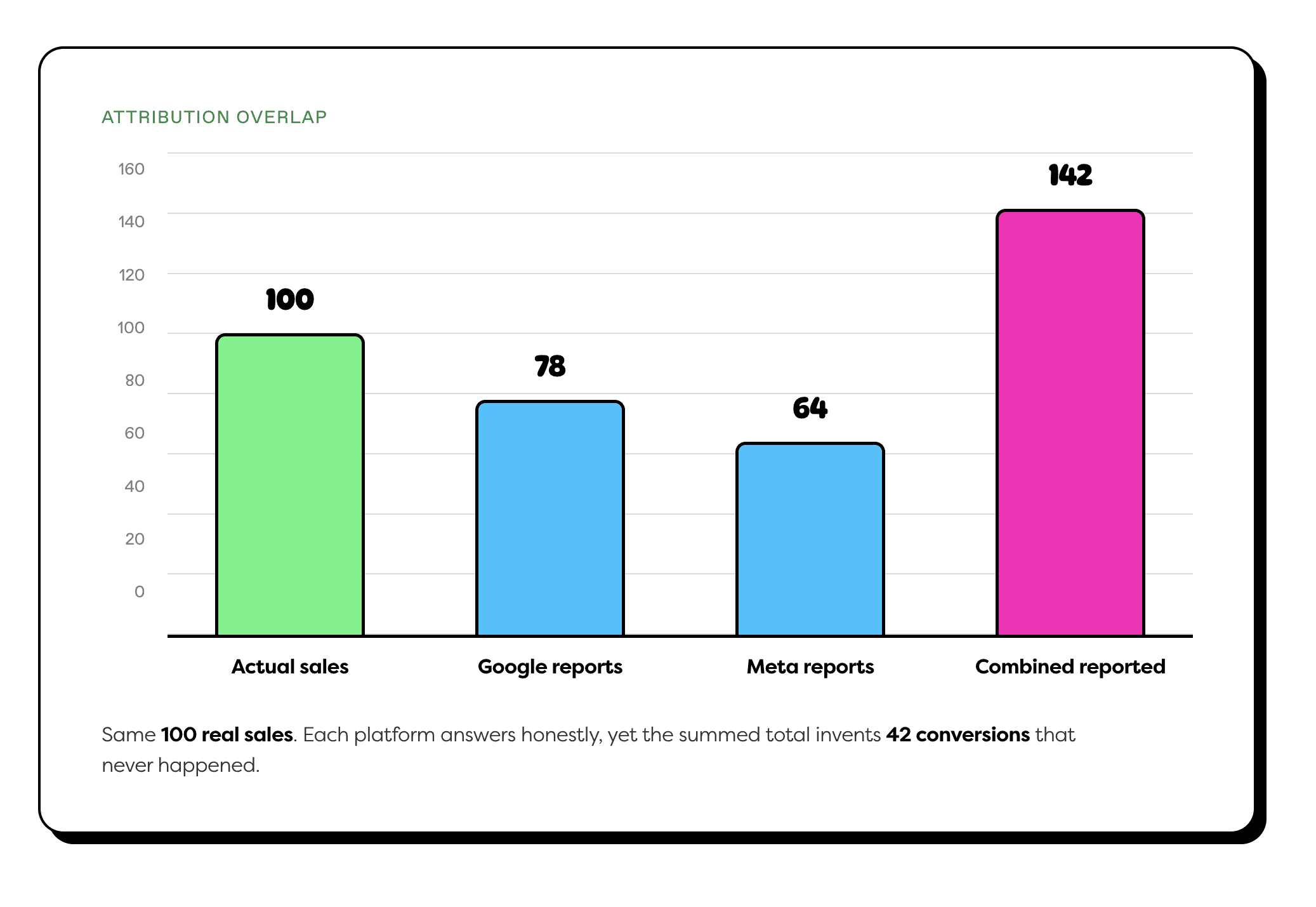
Attribution windows are the version of this everybody knows about, but the same drift runs through metrics that look far simpler. Even CPM changes meaning between platforms, because LinkedIn and Meta don't agree on what counts as an impression.
When that agent queries both platforms, it faithfully returns two correct answers, which is how an agency ends up acting on data that is technically correct and structurally misleading. That is the line that made it into Ad Age because it speaks to the drag on speed and quality of work long before it ever becomes a client problem. ROAS inside a short window is the cleanest example, where a profitable campaign can still post negative ROAS simply because the metric stopped counting before the customers finished paying back.
How do agencies make the fast answer the trusted answer?
By reconciling data from every source into one normalized layer before the AI is allowed to answer from it, the assistant stops parroting whichever platform it queried last and starts giving the strategist verified answers the analyst does not have to recheck.
This is the layer we have spent the spring building at Summer, and the goal is simple: the work that used to take an analyst a week should take about an hour. Connecting it to Claude or ChatGPT takes about a minute, and the setup runs in four steps.
So should agencies adopt MCP now?
Yes, but with a caveat: have both eyes open about what it solves and what it quietly leaves on the owner's desk. MCP solved access, it did not solve trust.The next round of agency tools will not win by answering faster but by making the fast answer one a strategist can act on without a safety check.

Liza Avramenko
Operator and CMO, Summer