LTV to CAC Ratio Formula: How to Calculate and Benchmark It
The LTV to CAC ratio is customer lifetime value divided by customer acquisition cost. Anything above one means each new customer pays back more than they cost to win. At Summer, we spent ten thousand dollars producing a video series, and this ratio is how we will determine whether we invested it wisely or lit it all on fire. The same campaign can land at 5.0 or 0.5, with the only moving part being how many customers it converted.
LTV:CAC ratio = LTV ÷ CAC
LTV, or lifetime value, is the average value a customer brings to your brand over the whole relationship, measured by profit not revenue. CAC, or customer acquisition cost, is total campaign spend divided by the number of new customers it converted. While CAC sounds trivial to compute, it can become complicated when trying to determine who constitutes a new customer.
How to calculate LTV
Customer lifetime value, or LTV, is the gross profit a customer brings in over the whole relationship. Calculate it from four numbers your store or CRM already has.
LTV = Average order value × Purchases per year × Years as a customer × Gross margin
Input | Value |
|---|---|
Average order value | $80 |
Purchases per year | 3 |
Years as a customer | 2 |
Revenue per customer | $480 |
Gross margin | 60% |
LTV | $288 |
Use the margin version, not revenue, when you compare LTV to CAC, because CAC is a cost and revenue overstates what each customer is worth.
How to calculate the LTV to CAC ratio
Take the ten thousand dollar video campaign Summer is running against a customer lifetime value of five thousand dollars. Although both rows use identical spend and identical LTV, the differing conversion counts result in wildly different outcomes.
Spend | Customers won | CAC | LTV | LTV:CAC | |
Scenario A | $10,000 | 10 | $1,000 | $5,000 | 5.0 |
Scenario B | $10,000 | 1 | $10,000 | $5,000 | 0.5 |
At ten conversions, every dollar of spend comes back as five dollars of customer value. Although ten conversions doesn’t sound like a lot on the surface, when measured against the lifetime value of the customer, the campaign is yielding great results. Contrasted against the second row, with one conversion, every dollar comes back as fifty cents, and we won’t be producing a season two.
Why even a profitable campaign can appear to have negative ROAS
ROAS, Return on Ad Spend, measures the revenue a campaign returned inside a determined time window. A slow-burning campaign is guaranteed to look awful at six months even though it may be converting customers worth five times their cost. A video series, a podcast, or any brand play that converts on a long lag posts a weak ROAS while its unit economics might be excellent. Time windows are one more place where platforms measure the same word differently, which is the same problem that shows up in how platforms count CPM impressions.
Plenty of good spend gets cut on exactly that reading. The campaign was out there acquiring your most valuable customers, and the only broken thing was the metric on the screen.
LTV to CAC ratio vs ROAS: what’s the difference?
ROAS is a media efficiency metric which helps marketers understand whether a campaign returned revenue inside a specific time horizon. The LTV to CAC ratio is a unit economic metric which tells you whether the customer was worth the cost of acquiring them.
These are both useful metrics which answer different questions. With the same data underlying it, a campaign can fail on one and pass on the other, which can lead to confusion regarding whether a campaign was successful or not.
What is a good LTV to CAC ratio?
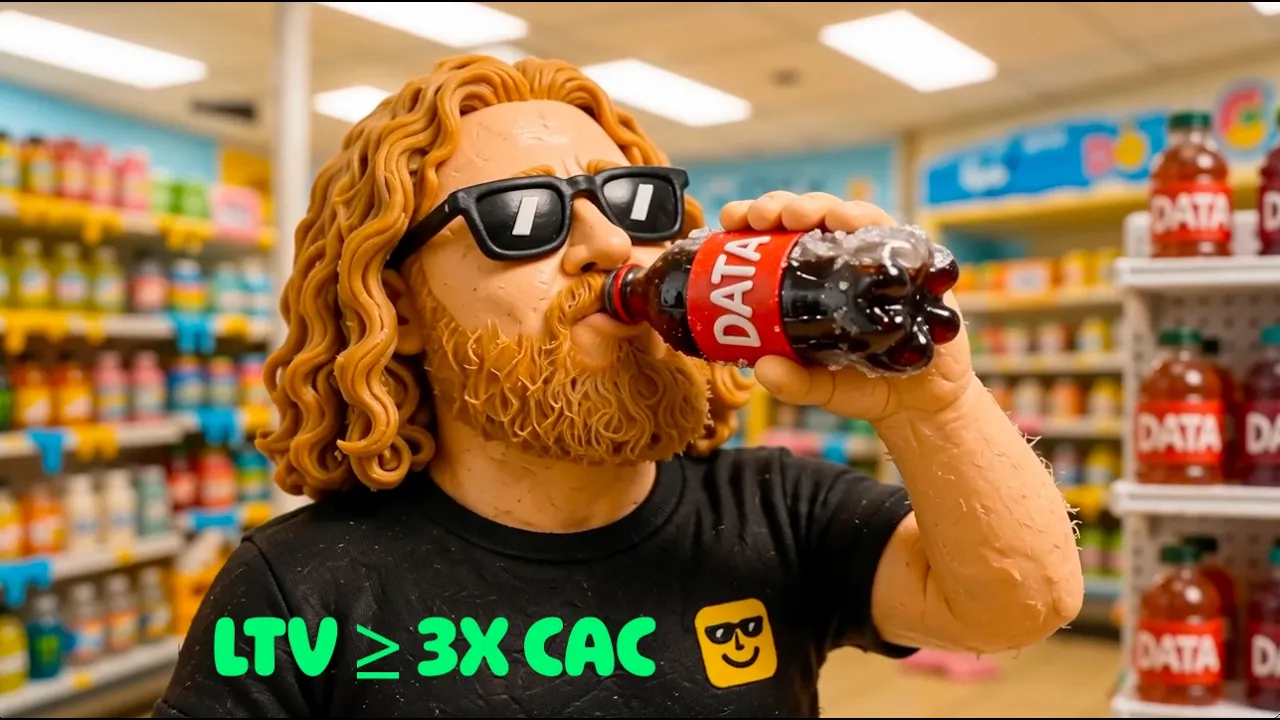
A good LTV to CAC ratio is three to one, meaning three dollars of customer lifetime value for every acquisition dollar. So long as your LTV to CAC is above one, your campaign is paying back. Any ratio below one means you’re losing money on each customer. Three to one is considered the benchmark standard for an effective campaign.
How to improve your LTV to CAC ratio
You improve your LTV to CAC ratio in one of two ways: raise the gross profit each customer brings in, or lower what it costs to win them. First, work on repeat purchases, because they lift LTV without adding acquisition spend, and a post-purchase email flow in Klaviyo timed to your reorder cycle is a direct way to get them. Second, protect gross margin, since a discount that wins a sale also lowers the LTV of every customer who uses it. Third, cut spend on campaigns whose customers never buy a second time, even when their first-order cost looks cheap. Finally, check that CAC counts only new customers, because returning buyers in the count make CAC look lower than it is. Here’s what one more purchase a year does to the LTV example above, at a CAC of $96:
Before | After | |
|---|---|---|
Purchases per year | 3 | 4 |
Revenue per customer | $480 | $640 |
LTV (60% margin) | $288 | $384 |
CAC | $96 | $96 |
LTV:CAC | 3.0 | 4.0 |
The ratio rose from 3.0 to 4.0 without an extra dollar of ad spend.
Why do LTV and CAC disagree on who counts as a customer?
The most difficult part of generating this metric is that spend lives on ad platforms and customer value lives within revenue reporting. Getting these two discrete systems to agree on what a customer is and when their conversion counts is a challenge in and of itself.
Summer puts all your marketing data in one place you can talk to. Both halves of the ratio come from a normalized layer, with one metric meaning the same thing everywhere. Ask any campaign question in plain English and get a verified answer back, with an audit trail carrying the query it asked and the rows it investigated.
When somebody asks why the LTV to CAC ratio changed, the explanation is already there. Connect once, ask anything.
Frequently asked questions
What is the LTV to CAC ratio?
The LTV to CAC ratio divides customer lifetime value by customer acquisition cost to show whether new customers return more than they cost to acquire. A ratio of five means five dollars back for every acquisition dollar spent.
What is the LTV to CAC ratio formula?
The formula is LTV divided by CAC, where LTV is average customer lifetime value and CAC is campaign spend divided by converted customers. An LTV of five thousand dollars against a CAC of one thousand gives a ratio of five.
What is a good LTV to CAC ratio?
The common benchmark is three to one, meaning three dollars of lifetime value for every dollar spent on acquisition. Anything below one means you’re losing money on every customer you win.
What does LTV mean in marketing?
LTV is lifetime value, the average value a customer brings to your brand over the course of the relationship. It’s generally measured on gross profit rather than revenue, so margin changes the number but sales don’t.
What does CAC stand for?
CAC is customer acquisition cost, calculated as total spend divided by the new customers it converted. A ten thousand dollar campaign that wins ten customers has a CAC of one thousand dollars.
What’s the difference between LTV/CAC and ROAS?
ROAS measures revenue returned inside a set time window, while the LTV to CAC ratio measures the whole customer relationship against what it cost to start. A campaign can post a weak six-month ROAS and still carry a successful LTV to CAC ratio of five.
Is LTV based on revenue or profit?
LTV is generally measured on gross profit rather than revenue. Two brands with identical revenue per customer can carry very different LTVs once margins enter the math.